
Self-Publishing Revenue: Realistic Expectations (2026)
What do self-published authors actually earn? We break down realistic revenue tiers, the factors that drive income, and what the data from 2,500+ bestsellers reveals.
The Truth About Self-Publishing Income
The internet loves self-publishing income extremes. You will find authors posting screenshots of $50,000 months and you will find blog posts claiming the median self-published author earns $500 per year. Both are real. Neither tells you what you can expect.
We analyzed 2,500+ bestselling books across seven major fiction genres to understand the economics of successful self-publishing. Not the average author — the authors who actually appear on bestseller lists, genre charts, and Amazon's recommendation algorithm. These are the books that sell.
This is not a survey of all self-published authors (most of whom publish one book and never market it). This is an analysis of what works for the authors who treat publishing as a business. The data reveals clear patterns in genre choice, pricing, publishing velocity, and distribution strategy that separate the authors who earn a living from the ones who earn a hobby income.
Important caveat: Revenue numbers in this article are estimates based on bestseller rank data, pricing, page counts, and KU rates. Exact author earnings are private. We use industry-standard BSR-to-sales conversion formulas and publicly available KU page-read rates to derive our estimates.
Let us start with the four revenue tiers that define self-publishing income, then break down exactly what separates each level.
The Four Revenue Tiers of Self-Publishing
Based on public income reports, Author Earnings data, and our analysis of bestseller economics, self-publishing income falls into four broad tiers. Each tier has distinct characteristics, and understanding what drives the transitions between them is more useful than the dollar amounts themselves.
Tier 1: Hobby ($0–$500/month)
This is where most self-published authors sit — including many with genuinely good books. The hallmarks of Tier 1 are: 1–3 published books, inconsistent or no marketing, a cover and blurb that do not match genre expectations, and no clear series strategy. At this level, Amazon's algorithm has no reason to recommend your book because there is not enough data (sales, page reads, reviews) to trigger visibility.
Tier 1 is not a talent problem. It is a discoverability problem. A well-written book with a bad cover and no reviews will not sell, period. A mediocre book with a perfect cover, genre-accurate blurb, and 50 reviews will outsell it ten to one.
Tier 2: Part-Time ($500–$2,000/month)
The transition from Tier 1 to Tier 2 usually happens when an author has 4–8 books published, a functioning series or two, adequate covers and blurbs, and a basic Amazon Ads spend ($5–$15/day). At this level, the backlist starts generating passive income — older books sell 1–5 copies per day without active promotion. The key insight at Tier 2 is that each new book lifts the entire backlist. A new release does not just generate its own sales; it drives readers back to discover earlier books.
Tier 3: Full-Time ($2,000–$10,000/month)
Full-time indie authors typically have 10–25+ books, at least one series with strong read-through, a mature Amazon Ads strategy, and an email list of 1,000+ subscribers. They publish 4–6 books per year and have dialed in their genre, pricing, and marketing. Revenue at this level comes from three streams: direct ebook sales, KU page reads, and print/audio editions. The backlist generates 60–70% of monthly income, with new releases providing periodic spikes.
Tier 4: Top Earner ($10,000+/month)
The top earning indie authors — $10k to $100k+ per month — share a pattern: rapid release schedules (6–12 books per year), large backlists (30+ titles), heavy KU enrollment in high-consumption genres, sophisticated advertising across Amazon and Facebook, and often a BookTok or social media presence that drives organic discovery. Authors like Freida McFadden, Lucy Score, and L.J. Shen demonstrate that indie publishing can compete with — and in some cases exceed — traditional publishing advances.
Factor 1: Genre Choice Is the Biggest Revenue Decision
Not all genres are created equal when it comes to earning potential. Our data reveals massive differences in reader demand, pricing, and consumption patterns across genres.
Romance is the highest-volume fiction market by a wide margin. With 14 million Goodreads ratings in our dataset and an average price of $7.58, romance offers the largest addressable audience. The 58% KU enrollment rate means romance readers are voracious subscribers who consume books at extraordinary rates — many reading 3–5 books per week. For a prolific author, this consumption velocity translates directly into page-read revenue.
Fantasy has the highest per-book value with an average price of $11.67 and 19.4 million Goodreads ratings. Fantasy readers are deeply engaged — they write reviews, participate in fandoms, and follow authors for decades. The trade-off is that fantasy books take longer to write (469 average pages vs. 350 for thrillers) and readers expect higher production values.
Thrillers offer a fast production cycle. At 350 average pages and $8.86 average price, thrillers are shorter than fantasy and price higher than romance. The 36% KU rate and low 20% series rate mean thriller economics favor standalone books with high marketing spend rather than the series-based approach that dominates romance.
Horror is the sleeper genre for KU authors. With 60% KU enrollment — the highest of any genre — horror readers are subscription-first consumers. The lower average price ($7.36) and 3.6 million Goodreads ratings suggest a smaller but extremely dedicated readership that consumes rapidly.
Tip: Genre choice does not mean writing something you hate for money. It means understanding that a romance author publishing 6 books per year will, on average, reach profitability faster than a literary fiction author publishing 1 book every 2 years — simply because the market mechanics are different.
Romance: 14M GR ratings, 58% KU

The Mysterious Bakery on Rue de Paris: An Enchanting and Escapist Novel from the Internationally Bestselling author of The Lost Bookshop for 2025

The Butcher (Fifth Republic Series Book 1)
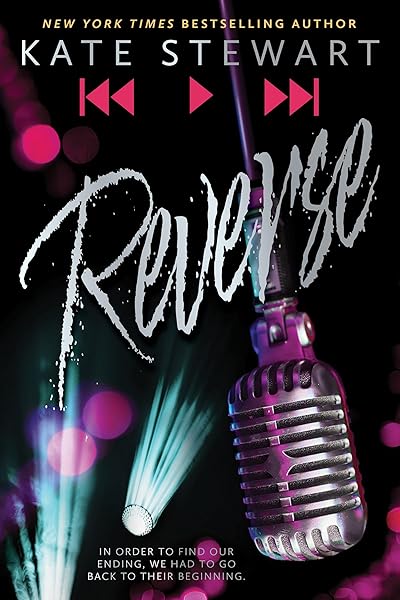
Reverse (Bittersweet Symphony Duet)

Cowboy Casual (The Calloway Ranch Series Book 1)

Vows We Never Made: A Grumpy Sunshine Romance (The Blackthorn Inheritance Book 1)

Here and Now (Ember Falls Book 2)
Fantasy: 19.4M GR ratings, $11.67 avg

On Wings of Blood: A Novel (Bloodwing Academy Book 1)

Rain of Shadows and Endings (The Legacy)

A Tongue so Sweet and Deadly (The Compelling Fates Saga)

Shield of Sparrows: An Enemies-to-Lovers Epic Romantasy

We Who Will Die: An Epic Romantasy of Forbidden Love, Deadly Secrets, and Vampires in a High-Stakes Arena, Discover a Vividly Reimagined Ancient Rome (Empire of Blood Book 1)
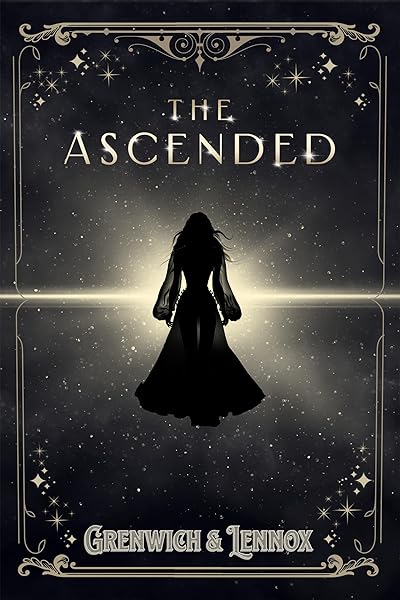
The Ascended (The Aesymarean Duet)
Factor 2: Backlist Size Is the Compound Interest of Publishing
If genre choice is the biggest decision, backlist size is the biggest multiplier. Every experienced indie author will tell you the same thing: income scaled meaningfully only after they had 5–10 books published. This is not about talent improving (though it does) — it is about mathematics.
Consider a simple model. An author with one book selling 3 copies per day at $4.99 earns roughly $314 per month in royalties. That same author with ten books, each selling 3 copies per day, earns $3,140 per month. But the reality is even better than this linear model because of series read-through and also-bought visibility.
When you have 10 books and 3 of them are in a series, a reader who discovers Book 1 may read all three — tripling the revenue from that single reader acquisition. Amazon's "Customers Also Bought" algorithm links your books together, so each title drives traffic to your others. The more books you have, the more entry points exist for new readers to discover your catalog.
Our data shows that 54% of romance bestsellers and 44% of fantasy bestsellers are series entries. This is not a coincidence. Series are the most reliable path to building a backlist that earns passively because each new book in the series re-activates readers of the previous entries.
The velocity question: How fast should you publish? The data suggests that the most commercially successful indie authors publish 4–6 books per year. This pace keeps you visible in Amazon's algorithm (which favors recent releases) while leaving enough time to maintain quality. Some authors in KU-heavy genres like romance and LitRPG publish 8–12 books per year, often with shorter books (50,000–70,000 words).
There is no minimum quality threshold below which more books hurts you. Each book is evaluated independently by readers. A bad Book 7 does not reduce sales of Books 1–6 (though it may reduce read-through to Book 8). The compounding effect of more titles almost always outweighs the risk of occasional weaker entries.
Factor 3: KU vs. Wide — Two Different Revenue Models
The choice between Kindle Unlimited exclusivity and wide distribution is not just a pricing decision — it is a business model decision that affects every aspect of your revenue.
KU revenue model: Income comes from two streams — ebook sales (70% royalty at $2.99–$9.99) and page reads (~$0.0045 per page in the KENPC fund). For a 400-page novel, a single KU borrow generates roughly $1.80 in page-read revenue. A KU author with 1,000 borrows per month earns $1,800 in page-read revenue alone, plus whatever comes from direct sales. The total can significantly exceed what the same book would earn from sales alone.
Wide revenue model: Income comes from ebook sales across multiple retailers (Amazon, Apple Books, Kobo, Google Play, Barnes & Noble) plus aggregators like Draft2Digital and Smashwords. Wide authors typically earn 60–70% of their revenue from Amazon even without KU, with the remaining 30–40% split across other retailers. The advantage is platform independence and often higher per-sale revenue due to higher pricing.
Our data tells a clear story about which genres favor which model:
Romance and horror are overwhelmingly KU — 58% and 60% enrollment respectively. These are high-consumption genres where readers devour books rapidly. KU's all-you-can-read model matches the reader behavior perfectly, and the page-read revenue compounds with prolific publishing schedules.
Fantasy, thrillers, and mystery are more balanced at 36–42% KU. These genres have a stronger tradition of direct sales and wider distribution, and their higher price points make per-sale revenue more significant.
The hybrid approach: Some authors use KU strategically — enrolling a series starter in KU to maximize visibility, then going wide with the rest of the series once it has built momentum. Others start in KU to build a readership, then go wide once their backlist is large enough to sustain revenue across multiple platforms. There is no permanent commitment; KU enrollment periods are 90 days and can be changed at each renewal.
Horror: 60% KU — highest enrollment

The First Witch of Boston: A Novel
On Wings of Blood: A Novel (Bloodwing Academy Book 1)
We Who Will Die: An Epic Romantasy of Forbidden Love, Deadly Secrets, and Vampires in a High-Stakes Arena, Discover a Vividly Reimagined Ancient Rome (Empire of Blood Book 1)
The Ascended (The Aesymarean Duet)

Eldritch (The Eating Woods)

Enchantra: A spicy fantasy romance (Wicked Games Book 2)


Factor 4: Cover and Blurb Quality — The Revenue Multiplier
This is the factor that separates authors earning $200/month from authors earning $2,000/month with the same number of books. Your book cover and blurb are not creative expressions — they are conversion assets. Their job is to turn an Amazon impression into a click, and a click into a sale.
Cover impact: Amazon search results show a thumbnail, a title, an author name, a price, and a star rating. The cover is the largest visual element and the first thing a reader's eye lands on. A cover that signals the wrong genre — or no genre at all — will not get clicked, regardless of how good the book is. Our analysis of 2,500+ bestseller covers shows extremely strong genre conventions: romance uses specific typography and color palettes, thrillers use bold condensed type with high contrast, fantasy uses ornate lettering with rich imagery.
The revenue impact of a cover upgrade is measurable. Authors who replace a DIY cover with a genre-appropriate professional cover consistently report 2x–5x increases in sales within the first month. This is the single highest-ROI investment in self-publishing.
Blurb impact: The blurb is the second conversion gate. A reader who clicks your cover sees the blurb before making a purchase decision. A strong blurb — one that hooks with a premise, builds tension, and leaves the reader needing to know what happens — can convert 10–15% of page visitors into buyers. A weak blurb converts 2–3%. That 5x difference in conversion rate is a 5x difference in revenue from the same traffic.
Dear Pantser's Cover Generator creates genre-matched covers from $0.65 per image, and the Blurb Writer generates multiple blurb variations you can test. Together, they address the two highest-leverage conversion points in your book's sales funnel.
Genre-matched covers drive 2–5x more sales




Factor 5: Pricing Strategy and Revenue Optimization
We covered pricing in depth in our book pricing strategy article, but the revenue implications deserve emphasis here.
The difference between pricing at $4.99 and $6.99 is $2.10 per sale at the 70% royalty tier. For an author selling 100 copies per month, that is $210/month — or $2,520 per year from a single pricing change. Across a 10-book backlist, the impact is $25,200 per year.
This is why genre-appropriate pricing matters so much for revenue. Our data shows:
Price Anchoring and Perceived Value
Readers develop price expectations from the genre they browse. A fantasy reader who regularly sees $11–$14 ebooks will perceive a $7.99 indie fantasy as a bargain. A romance reader who sees mostly $4.99 KU books will perceive $9.99 as premium. Your price is not evaluated in isolation — it is compared against the genre's price distribution.
Indie authors have a structural advantage here: they can undercut traditional publishers by $3–$7 per ebook while still earning more per sale (70% of $7.99 = $5.59 vs. a trad author's 25% of $14.99 = $3.75). This price-to-quality ratio is the engine that drives indie market share growth.
Revenue Per Reader vs. Revenue Per Book
The most profitable indie authors think in terms of revenue per reader, not revenue per book. A reader who discovers your series and reads all five books at $4.99 each generates $17.45 in royalties (5 × $3.49). That same reader acquired through a $0.99 Book 1 cost you just $0.35 in reduced royalties — a 49:1 return on investment.
This is why series writing dominates indie publishing revenue. The customer acquisition cost (via ads, promotions, or discounted Book 1 pricing) is amortized across the entire series. Authors with long series (7–10+ books) can afford to spend $3–$5 acquiring each reader because the lifetime value of that reader is $20–$35.
Timeline Expectations: How Long Until You Earn
One of the most damaging myths in self-publishing is the idea that you can publish one book and immediately earn a meaningful income. The reality is that self-publishing is a long game, and authors who understand the timeline are far more likely to reach profitability than those who expect instant results.
Months 1–6 (Book 1): Expect minimal revenue — $0 to $200 per month. Your first book has no reviews, no backlist support, no algorithm momentum, and likely imperfect packaging (cover, blurb, keywords). This is the learning phase. Focus on craft, on understanding your genre's reader expectations, and on building an email list. Do not judge your career potential based on Book 1 performance.
Months 6–18 (Books 2–4): Revenue typically reaches $200–$800 per month if you are writing in a viable genre with adequate covers and blurbs, and running basic Amazon Ads. Each new book lifts the backlist. Series read-through starts to compound. Reviews accumulate. Amazon's algorithm begins to learn who your readers are.
Months 18–36 (Books 5–10): This is where the tipping point typically occurs. With 5–10 books, a functioning series, and maturing ads, many authors cross the $1,000–$3,000/month threshold. The backlist generates reliable passive income, and new releases produce predictable launch spikes. At this point, the business is self-sustaining — revenue exceeds marketing costs.
Year 3+ (10+ books): Authors who have published 10+ books over 3+ years and consistently improved their craft and marketing typically earn $3,000–$10,000+ per month. The backlist alone can generate $2,000–$5,000/month with minimal ongoing effort, freeing up time to write new books that spike revenue further.
Key insight: The authors who reach full-time income are not necessarily more talented writers. They are the ones who kept publishing through the low-revenue early months, invested in covers and blurbs, and treated each book as a data point that informed the next one.
The Revenue Multiplier Stack
Revenue in self-publishing is not driven by any single factor — it is the product of multiple multipliers. Understanding this stack helps you identify where your biggest leverage points are.
Genre demand × Backlist size × Release velocity × Cover conversion × Blurb conversion × Price optimization × KU/wide strategy × Ad efficiency = Revenue
Each factor multiplies the others. A 2x improvement in cover conversion combined with a 2x improvement in backlist size does not add 4x — it multiplies to 4x. This is why authors who improve across multiple dimensions see non-linear revenue growth.
The practical implication: do not obsess over one factor. An author spending $500/month on ads with a bad cover is pouring money into a leaky funnel. An author with a perfect cover but no ads is invisible. An author with great marketing but only one book cannot compound. The stack works as a system.
Here is where to focus at each stage:
1–3 books: Cover quality + blurb quality + genre selection. These are your highest-leverage improvements when you have a small catalog.
4–8 books: Release velocity + series strategy + basic ads. Your backlist is large enough to start compounding. Each new release lifts the whole catalog.
8+ books: Ad optimization + pricing experiments + wide vs. KU evaluation. You have enough data to make informed decisions about pricing and distribution.
What the Data Actually Shows: Genre Revenue Comparison
Let us translate our bestseller data into estimated revenue ranges per book per month, based on genre pricing, page counts, KU rates, and typical sales volumes for books appearing on genre bestseller lists.
Romance — $7.58 avg price, 58% KU, 414 pages, 54% series. A bestselling romance in KU generating 500 borrows and 200 sales per month earns approximately $1,600/month ($900 page reads + $700 sales). The series multiplier makes this $4,800–$8,000/month across a 3–5 book series.
Fantasy — $11.67 avg price, 42% KU, 469 pages, 44% series. Fantasy's higher pricing means fewer sales are needed for the same revenue. A bestselling fantasy generating 150 sales per month at $9.99 earns $1,050/month per book. A 5-book series with 50% read-through generates $2,600–$3,500/month.
Thriller — $8.86 avg price, 36% KU, 350 pages, 20% series. Thrillers earn more per individual title due to higher per-sale pricing, but the low series rate means less compounding. A bestselling standalone thriller generating 300 sales per month earns approximately $1,860/month.
Mystery — $8.85 avg price, 38% KU, 351 pages, 26% series. Similar economics to thrillers. Cozy mystery series are the exception — cozy series can run 10–20+ books with loyal readerships, making them one of the most profitable long-term plays in indie publishing.
Horror — $7.36 avg price, 60% KU, 370 pages, 40% series. Horror's high KU rate and moderate series rate create a page-read machine. A horror author with a KU trilogy generating 800 borrows/month across three books earns roughly $4,300/month in page reads alone.
Mystery: $8.85 avg, 26% series

Building Your Revenue Plan
Realistic revenue expectations require an honest assessment of where you are today and a concrete plan for where you want to be in 12–24 months.
Step 1: Pick your genre intentionally. Use Dear Pantser's Market Analysis to understand the competitive landscape, reader demand, and pricing norms in your genre. Writing what you love is essential for sustainability — but writing what you love in a genre where readers are actively spending money is essential for revenue.
Step 2: Plan a series. Our data shows that series dominate bestseller lists in every high-revenue genre. Plan at least a trilogy before you publish Book 1. Knowing where the story goes lets you plant hooks in earlier books that drive read-through.
Step 3: Invest in the conversion stack. Before spending money on ads, make sure your cover and blurb are genre-appropriate. Advertising a book with a weak cover is like running Facebook ads to a broken landing page — you are paying for traffic that will not convert.
Step 4: Set a release schedule. Commit to publishing 3–4 books in your first year. This is ambitious but achievable for most genres if you write 1,000–2,000 words per day. The Plot Generator can help you outline faster so you spend more time writing and less time staring at a blank page.
Step 5: Measure and adjust quarterly. Every 90 days, review your revenue per book, read-through rates, ad spend efficiency, and review growth. Use this data to decide whether to adjust pricing, change your KU/wide strategy, or invest more in marketing a specific title.
The bottom line: Self-publishing revenue is real, achievable, and growing. But it is not passive and it is not instant. Treat it as a business, invest in the right areas, publish consistently, and the math will work in your favor. Start by researching your genre's market data — understanding the playing field is the first step toward earning on it.
From first book to full-time: it starts with the right tools


Explore Market Data by Genre
Browse real Amazon data for 40+ genres — prices, KU rates, tropes, and trends.
Open Market AnalysisRelated Articles
Data-driven analysis of 2,500+ bestselling book covers across 27 genres. Typography patterns, color palettes, image types, and what top sellers have in common.
Data-driven book pricing strategy by genre. We analyzed 2,500+ bestsellers to find the price sweet spots for romance, fantasy, thriller, and more.
Which book tropes actually sell? We analyzed 2,500+ bestsellers to find the most commercially successful tropes in romance, fantasy, thriller, and more.