
Self-Publishing vs Traditional: The Real Numbers (2026)
An honest comparison of self-publishing and traditional publishing in 2026. Revenue splits, timelines, creative control, marketing realities, and when each path makes sense — backed by data from 2,500+ books.
The Debate That Won't Die (Now With Actual Numbers)
Every year, the self-publishing vs. traditional publishing debate resurfaces — and every year, both sides argue past each other. Traditional publishing advocates point to prestige, bookstore distribution, and editorial support. Self-publishing advocates point to royalty rates, creative control, and speed to market. Both sides are right. Both sides are incomplete.
In 2026, the landscape has shifted enough that the old arguments need updating. Self-publishing has matured from a stigmatized last resort to a legitimate first choice for many authors — and traditional publishing has evolved its models in response. The "right" path depends on your genre, your goals, and your honest assessment of what you're willing to do yourself.
This article compares the two paths using real numbers — not aspirational anecdotes from either side. We'll use data from our analysis of 2,500+ books across major fiction genres, combined with publicly available industry reports, to paint an accurate picture of what authors can realistically expect from each path.
No cheerleading. No gatekeeping. Just math.
Bestsellers exist on both sides of the aisle

Bad Bishop: A Dark Mafia Romance (Society of Villains Book 1)

Till Summer Do Us Part

Rewind It Back (Windy City Series Book 5)

Say You'll Remember Me

The Wild Card: a single dad hockey romance

Picking Daisies on Sundays

The Fall Risk: A Short Story

King of Depravity: Dark Steamy Mafia/Billionaire Romance (Kings of Las Vegas Book 1)

The Mysterious Bakery on Rue de Paris: An Enchanting and Escapist Novel from the Internationally Bestselling author of The Lost Bookshop for 2025

The Butcher (Fifth Republic Series Book 1)
Revenue: The 70% vs. 10% Reality
The single biggest difference between self-publishing and traditional publishing is the royalty split. This one number shapes everything else — how much you earn, how many copies you need to sell, and what "success" looks like.
Self-publishing (Amazon KDP):
At the standard ebook price range ($2.99-$9.99), KDP pays 70% royalty minus a small delivery fee. A $4.99 ebook earns approximately $3.49 per sale. A $9.99 ebook earns approximately $6.99. Paperback royalties vary by printing cost but typically yield $2-$5 per copy.
Traditional publishing:
Standard ebook royalty is 25% of net receipts (what Amazon pays the publisher, which is roughly 70% of list price). So: 25% × 70% = about 17.5% of list price. On a $14.99 traditionally published ebook, the author earns approximately $2.62. On hardcover ($27.99), the standard rate is 10% of list price = $2.80 per copy. Paperback ($16.99) at 7.5% = $1.27.
Wait — traditionally published authors earn less per copy on a higher-priced ebook than indie authors earn on a cheaper one? Yes. That's the math.
The Advance: A Loan Against Future Earnings
Traditional publishing's headline feature is the advance — an upfront payment before the book is published. But advances are widely misunderstood.
What an advance actually is: A non-refundable loan against future royalties. If you receive a $10,000 advance, you don't start earning additional royalties until your book has "earned out" — generated $10,000 in royalties at the contracted rate. At a 10% hardcover royalty on a $27.99 book, that's approximately 3,571 copies sold before you see another check.
Current advance reality (2026):
Debut fiction: $5,000 to $25,000 (median around $10,000). This is not a living. It's partial compensation for 1-2 years of writing.
Mid-list fiction (established author, modest sales history): $15,000 to $75,000.
Lead title (publisher expects bestseller): $100,000 to $500,000+. These are rare — reserved for proven authors or exceptional acquisitions.
The earn-out problem: Industry data consistently shows that roughly 50-70% of traditionally published books never earn out their advance. This means most traditionally published authors never receive a royalty check beyond their initial advance. The publisher takes a loss, and the author's total compensation for 2+ years of work was the advance itself.
This isn't a criticism of traditional publishing — it's a structural reality. Publishers spread risk across many titles, knowing most won't be profitable, because the ones that break out more than cover the losses. Authors absorb this risk differently: they get a guaranteed payment (the advance) but limited upside unless they're in the 30-50% that earn out.
Timeline: Weeks vs. Years
For authors who value speed, this comparison is brutal.
Self-publishing timeline:
Manuscript complete → Book live on Amazon: 1 to 4 weeks. This includes formatting, cover creation, description writing, and KDP upload. If your manuscript is polished and your cover is ready, you can publish in under a week.
Traditional publishing timeline:
Manuscript complete → Book on bookstore shelves: 18 to 36 months. Here's how it breaks down: querying agents (3-12 months, often longer), agent shops manuscript to publishers (2-6 months), contract negotiation (1-2 months), editorial process (6-12 months), production and marketing lead time (6-9 months).
That's not a typo. From the moment you finish writing to the moment a reader can buy your traditionally published book, two to three years is standard.
For genre fiction — especially fast-moving genres like romance and thriller — this timeline is particularly costly. Trends shift. Reader tastes evolve. The enemies-to-lovers dark romance that's burning up Amazon today may be oversaturated by the time a traditional publisher releases it in 2028.
Self-published authors in romance routinely publish 4-6 books per year. In the same time period, a traditionally published romance author might release one. The revenue differential from output volume alone can dwarf the advance.
Creative Control: Full vs. Collaborative
Creative control is the most emotional part of this comparison — and the most personal. What feels like freedom to one author feels like isolation to another.
Self-publishing: full control, full responsibility.
You choose your cover. You write your description. You set your price. You decide when to publish and when to pull. You pick your genre categories, your keywords, your marketing strategy. Nobody can change your ending, rename your character, or redesign your cover without your permission.
The flip side: nobody is there to tell you your cover doesn't work, your pacing drags in the middle, or your title sounds like three other books released this month. Full control means full accountability for mistakes. The authors who thrive in self-publishing are the ones who build a team — editor, cover designer, beta readers — who provide the quality checks that a publisher would.
Traditional publishing: guided control.
Your editor will push you to make the book better — and sometimes that push is exactly what the manuscript needs. The publisher's art department creates your cover (you may have input, but rarely veto power). The marketing team positions the book (you may disagree with their strategy). The sales team determines print run and distribution.
For some authors, this collaboration is liberating. They want to focus on writing and let professionals handle the rest. For others, it's agonizing — especially when the publisher makes decisions that don't align with the author's vision for their book.
The cover question is particularly fraught. In our analysis of 2,500+ books, we consistently see that genre-accurate covers drive sales. Traditional publishers generally do this well for lead titles, but mid-list and debut titles sometimes receive covers that don't signal the right genre — and the author has limited recourse.
Self-pub romance: authors control the brand
Trad pub literary: publisher-designed covers


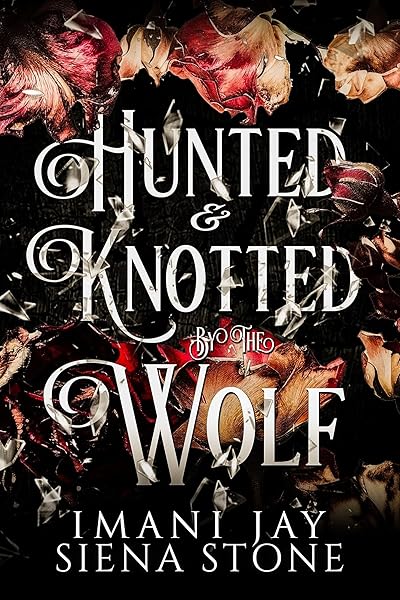

Marketing: DIY vs. Publisher Support (The Honest Version)
The biggest myth in publishing is that traditional publishers do your marketing for you. Let's dismantle it.
Traditional publisher marketing reality:
Lead titles (the 2-3 books per season that the publisher is betting big on) receive meaningful marketing budgets: review copy mailings, bookstore placement payments, advertising, media outreach, and social media promotion. If you're a lead title, the publisher's marketing machine is genuinely powerful.
Mid-list and debut titles receive... a press release, an entry on the publisher's website, and encouragement to "build your platform." The rest — social media, newsletter building, reader outreach, advertising — falls on the author. Many traditionally published authors are shocked to discover that their publisher's marketing plan is essentially "we'll make the book available; you drive the demand."
Self-publishing marketing reality:
Everything is on you, but you keep the upside. Amazon Ads, BookBub promotions, newsletter swaps, social media, email lists — you control the budget, the strategy, and the timing. A $5/day Amazon ad budget ($150/month) is often enough to maintain visibility in less competitive genres.
The advantage self-publishers have: data. Amazon's advertising platform provides real-time data on which keywords convert, which audiences respond, and what your cost per acquisition is. Traditional publishers have this data too — but they rarely share it with authors. Self-publishers can optimize week by week, adjusting price, ads, and positioning based on actual performance.
The honest comparison: unless you're a lead title, the marketing support difference between self-publishing and traditional publishing is smaller than you think. Both paths ultimately require the author to be the primary engine of demand. The difference is whether you have the tools and data to optimize that engine (self-pub) or whether you're operating partially blind (trad pub).
Realistic Income at Each Level
Let's model income scenarios for both paths, using realistic assumptions from current market data.
Debut Author Comparison
Scenario: First fiction novel, no platform, no prior sales.
Traditional: $10,000 advance. Book publishes 24 months after signing. Sells 3,000 copies at $16.99 paperback (7.5% = $1.27/copy). Total royalties: $3,816. Since this is less than the advance, total author income = $10,000 (the advance). Time invested: 2+ years of querying + 2 years to publication = $10,000 over 4 years.
Self-published: $0 advance. Book publishes 1 month after completion. Priced at $4.99 ebook (70% = $3.49/copy). Sells 500 copies in year one (realistic for a debut with modest marketing). Total income: $1,745. But — the self-published author writes a second book 6 months later. Same sales. Year one total: $3,490 over 1 year.
The traditionally published author earned more total dollars — but over 4x the time period, with no ability to publish more during the wait. The self-published author earned less per title but has two assets generating ongoing revenue and can continue publishing at will.
Established Author Comparison
Scenario: Author with 5+ published books, established readership.
Traditional: $50,000 advance per book. Publishes one book per year. Books earn out 40% of the time. Average annual income: $50,000 (the advance) + occasional earn-out royalties of $5,000-$15,000. Total: $55,000-$65,000/year.
Self-published: Publishes 3 books per year. Each sells 5,000 copies at $4.99 (70% royalty). Plus KU page reads estimated at $3,000/book. Annual income: (5,000 × $3.49 × 3) + ($3,000 × 3) = $52,350 + $9,000 = $61,350/year.
Nearly identical income at this level — but the self-published author has 15+ backlist titles generating ongoing passive revenue that compounds yearly, while the traditionally published author's backlist may be out of print or earning minimal royalties.
Top Performer Comparison
Scenario: Bestselling author, dedicated fanbase.
At the top end, traditional publishing offers something self-publishing can't easily replicate: film/TV deals, international rights sales, and the cultural cachet of major literary prizes. A seven-figure traditional deal for a proven author can exceed what most self-published authors earn, period.
But self-published top performers exist in the same income bracket. Authors earning $500K+ per year from self-publishing are not unicorns — they're identifiable, primarily in romance and thriller, publishing consistently and leveraging series readthrough, KU, and Amazon advertising at scale.
The key difference at the top: traditional publishing has a higher ceiling for individual moonshot outcomes (million-dollar advances, Netflix adaptations). Self-publishing has a more predictable path to high five- and six-figure income through consistent output and backlist compounding.
When Traditional Publishing Makes Sense
Despite the royalty math favoring self-publishing, there are legitimate reasons to pursue traditional publishing:
Bookstore distribution. If physical bookstore presence matters to you — and for some genres like literary fiction and children's books, it genuinely affects sales — traditional publishing provides access that self-publishing can't easily replicate. Barnes & Noble, independent bookstores, and airport bookshops work with distributors who work with publishers, not individual authors.
Library access. Libraries primarily acquire through traditional distribution channels. Self-published authors can get into libraries (through services like IngramSpark and library-specific distributors), but it requires effort that traditional publishing handles automatically.
Prestige and validation. For some authors, being traditionally published is a meaningful personal goal. There's nothing wrong with that. A publisher choosing your book is a form of validation that self-publishing doesn't offer.
Foreign rights and subsidiary rights. Traditional publishers have established international networks for selling translation rights, audio rights, and film/TV rights. These subsidiary rights can generate significant additional income — income that's harder (though not impossible) for self-published authors to access.
You don't want to run a business. Self-publishing is entrepreneurship. You're the CEO, marketing director, and creative department. If the business side doesn't appeal to you — if you just want to write — traditional publishing lets you outsource everything except the writing itself.
When Self-Publishing Makes Sense
Self-publishing is the stronger choice in more situations than most authors realize:
Genre fiction with high reader velocity. Romance, thriller, mystery, horror, fantasy — genres where readers consume quickly and series dominate. Our data: Romance 58% KU at $7.58, Horror 60% KU at $7.36, Fantasy 42% KU at $11.67. These genres reward output speed and series building — exactly what self-publishing enables.
Series authors. Readthrough economics massively favor self-publishing. A three-book series at 70% royalty with 60% readthrough generates nearly 2x revenue per initial reader. Traditional publishing's lower royalty rate makes the same math less compelling.
Authors who want control. Cover design, pricing, release timing, marketing strategy, rights retention — self-publishing puts every decision in your hands. If you have strong opinions about how your book should be presented, self-publishing eliminates the friction of committee decisions.
Authors who write fast. If you can produce 3-4+ books per year, self-publishing lets you release them all. Traditional publishing typically limits you to 1-2 per year (per pen name) because of production and marketing slot constraints.
Niche genres. Traditional publishers need books that sell to broad audiences to justify their fixed costs. If your book targets a passionate but small niche — cozy fantasy, LitRPG, reverse harem, Amish romance — self-publishing connects you directly to that audience without a publisher deciding the niche is "too small."
Check the Market Intelligence tool to see where your genre sits in terms of competition, pricing, and KU adoption. The data helps you make this decision based on your specific market, not general advice.
Horror: 60% KU — self-pub territory

The First Witch of Boston: A Novel

On Wings of Blood: A Novel (Bloodwing Academy Book 1)

We Who Will Die: An Epic Romantasy of Forbidden Love, Deadly Secrets, and Vampires in a High-Stakes Arena, Discover a Vividly Reimagined Ancient Rome (Empire of Blood Book 1)
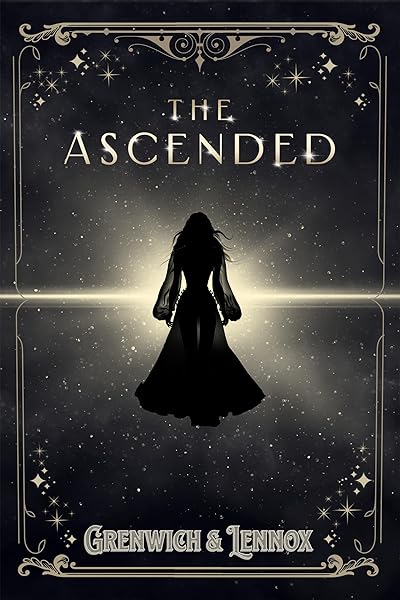
The Ascended (The Aesymarean Duet)

Eldritch (The Eating Woods)
Fantasy: $11.67 avg — high margins
On Wings of Blood: A Novel (Bloodwing Academy Book 1)

Rain of Shadows and Endings (The Legacy)

A Tongue so Sweet and Deadly (The Compelling Fates Saga)

Shield of Sparrows: An Enemies-to-Lovers Epic Romantasy
We Who Will Die: An Epic Romantasy of Forbidden Love, Deadly Secrets, and Vampires in a High-Stakes Arena, Discover a Vividly Reimagined Ancient Rome (Empire of Blood Book 1)
The Hybrid Path (And Why It's Growing)
In 2026, the fastest-growing segment of the author population is hybrid authors — those who publish some books traditionally and others independently. This isn't indecision; it's strategy.
How hybrid works: An author might publish their literary fiction through a traditional house (for bookstore distribution, reviews, and prestige) while self-publishing their genre fiction (for speed, royalty rates, and series economics). Different books, different goals, different paths.
Some authors use self-publishing as a proving ground: build an audience independently, demonstrate sales numbers, then negotiate a traditional deal from a position of strength. This is increasingly common and increasingly effective — publishers pay attention to self-published bestsellers.
Others move in the opposite direction: traditionally published authors whose publishers dropped them (or whose rights reverted) self-publish their backlist and new work, often earning more from indie publishing than they did from their traditional contracts.
The key insight: self-publishing and traditional publishing are not identities. They're distribution strategies. The best choice depends on the specific book, the specific genre, and the specific author's goals at that moment.
Neither path is inherently superior. The numbers don't lie — but they don't tell the whole story either. Your career, your creative vision, and your honest assessment of what you're willing to do (and not do) should drive the decision. Whatever path you choose, the tools exist to make it work. The market data is available, the cover technology has never been better, and the readers are out there — waiting for your book, regardless of who published it.
Start Publishing with Dear Pantser
AI covers, market analysis, blurb writer, and plot tools — all in one place.
Get StartedRelated Articles
Unlock the power of Amazon Ads for authors. Learn how to set up, optimize, and scale your campaigns for profitability, starting with just $5 a day.
Unlock the secrets to creating high-quality audiobooks in 2026, blending AI narration with traditional methods. Learn about tools, platforms, and best practices for indie authors.
Honest comparison of AI book cover generators in 2026: Dear Pantser, BookBrush, Canva, Midjourney, and DALL-E. Genre accuracy, typography, dimensions, cost, and learning curve — with data from 2,500+ books analyzed.